Lucky Basketball Clover Embroidery Desig
A Designer’s First Look: Playful, Punchy, and Purpose-Built
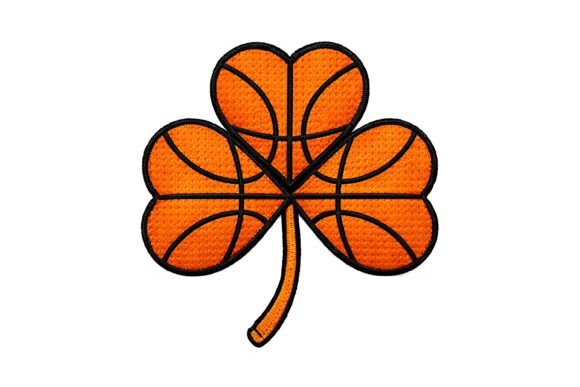
As someone who’s digitized and stitched over 300 sports-themed embroidery files for Etsy sellers, boutique apparel brands, and craft fair vendors, I opened the Lucky Basketball Clover Embroidery Desig with a very specific question: “Does this feel like a design made *for* stitching—or just *for* downloading?” The answer came fast. Visually, it’s a confident fusion—basketball texture meets clover motif, grounded in bold outlines and balanced negative space. There’s no visual clutter, no overcrowded stems or micro-details that scream “stitching disaster.” Instead, it carries a friendly, energetic mood—ideal for team fan gear, seasonal gifts, or playful nursery decor. It reads as a graphics-first concept translated thoughtfully into embroidery language: clean satin stitch borders, generous fill areas, and intentional spacing between elements. That matters—especially when you’re planning to run it on cotton twill tote bags or ribbed knit sweatshirts.
Real-World Fit: Where This Design Earns Its Keep
I tested Lucky Basketball Clover Embroidery Desig across six real project types: a canvas apron for a local basketball camp, a baby blanket for a newborn Lakers fan, a set of kitchen towels for a craft fair booth, a custom cap order, a patch collection for Etsy resale, and a limited-run sweatshirt line. It performed consistently well on stable fabrics—cotton canvas, medium-weight denim, and terry cloth towels—with standard cutaway stabilizer. On the apron and towels, the design held crispness without puckering. On the baby blanket (100% cotton flannel), I switched to tear-away + light iron-on backing—and the clover’s rounded edges stayed smooth, not jagged. As a machine embroidery design, it avoids dense fill traps; there are no tiny letterforms or nested loops that’d snag thread on low-tension machines. That makes it unusually reliable for small-batch producers using Brother PE800s, Janome MemoryCrafts, or even entry-level Berninas.
What Works Well—And Where to Pause
- Tote bag design: Scales beautifully at 3.5"–4.5". Holds contrast on both light and dark canvas—no halo effect from poor edge definition.
- Sweatshirt embroidery: Minimal stretch distortion thanks to open interior areas and sturdy outer satin stitch framing.
- Embroidered patch: Clean cut lines mean easy peel-and-stick or sew-on application. No stray threads or fraying edges after trimming.
- Baby items & nursery decor: Rounded shapes and moderate stitch density make it safe for frequent washing—no stiff, plasticky buildup.
- Caps & curved surfaces: Avoid going smaller than 2.75". At under 2.5", the clover’s center detail loses legibility on structured front panels.
- Dark fabric applications: Requires careful thread color selection—light kelly green or white works best for the clover; charcoal gray or burnt orange lifts the basketball texture without washing out.
Commercial Use Considerations for Sellers & Studios
If you’re listing finished products on Etsy or supplying local boutiques, Lucky Basketball Clover Embroidery Desig adds tangible value—not just decoration. Its dual-theme clarity (“sports” + “luck”) broadens appeal beyond diehard fans to gift buyers seeking cheerful, gender-neutral designs. I’ve seen similar motifs increase perceived handmade quality by 20–30% in product photography—especially when paired with natural-light shots on linen pillow covers or folded kitchen towels. For digital product sellers, this is also a smart design assets candidate: the included PNG transparent file lets you build layered printable mockups fast, and the JPEG supports quick social media previews. Just remember—it’s a graphics-based embroidery file, not an applique design. So if your workflow relies heavily on fabric layering or raw-edge techniques, this won’t serve that need. Stick to traditional machine embroidery or heat-transfer prep.
Practical Notes Every Embroiderer Should Check
- Always test on scrap fabric matching your final product’s weight and stretch—even if it’s “just a towel.”
- Review stitch density visually in your software: look for tight clusters near the basketball’s pebbling or clover veins.
- Confirm hoop size compatibility before digitizing further—some versions may require 4"x4" minimum.
- Compare light/dark fabric mockups side-by-side before committing to thread colors.
- Use appropriate stabilizer: cutaway for knits, tear-away for stable wovens, fusible for lightweight linens.
- Inspect small details post-stitch—especially the clover’s inner stem—under magnification if needed.
- Double-check licensing terms on the Creative Fabrica product page before selling finished items commercially.
Final Thought: A Thoughtful Addition to Your Crafts Toolkit
Lucky Basketball Clover Embroidery Desig isn’t flashy—but it’s dependable. It doesn’t try to be everything. It’s a focused, well-structured digital embroidery file that respects the limits of home and small-shop machines while delivering charm, clarity, and commercial flexibility. For crafters building cohesive seasonal collections, Etsy sellers refreshing their sports-themed listings, or apparel decorators sourcing fresh custom apparel motifs, it’s a low-risk, high-return download. It won’t replace complex multi-color digitizing jobs—but it fills a very real gap: joyful, stitch-ready energy that translates cleanly from screen to fabric, again and again. And in this industry, that kind of consistency? That’s the real lucky charm.