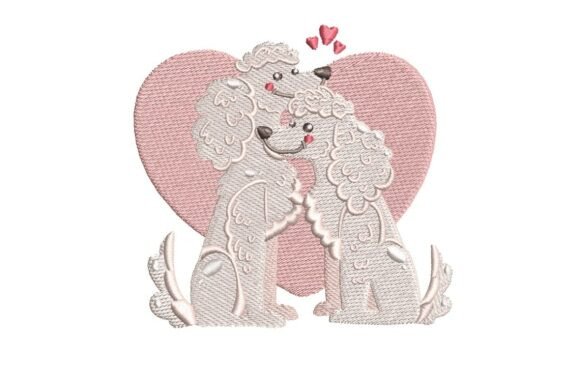
Poodles in Love Embroidery
First Impressions: Sweet, Elegant, and Deeply Personal
As an embroidery designer who’s tested hundreds of machine embroidery designs for retail gifting—especially for baby shops, wedding boutiques, and Etsy sellers—I opened the Poodles in Love Embroidery file with quiet anticipation. What greeted me wasn’t just another Valentine S Day motif—it was a tender, well-balanced composition: two elegant, fluffy poodles nestled together, their postures relaxed yet affectionate, their expressions soft and soulful. There’s no exaggerated cartoonishness here. Instead, the design leans into refined charm—think vintage storybook meets modern handmade sensibility. It feels romantic without being overly saccharine, playful without sacrificing sophistication. That duality makes it unusually versatile: equally at home on a nursery pillow cover as it is on a linen apron for a dog-loving baker.
Where This Design Truly Shines
The Poodles in Love Embroidery design excels when used intentionally—not as filler, but as emotional anchor. For baby embroidery, it transforms a simple organic cotton blanket into a cherished heirloom, especially for families with beloved poodle companions or those drawn to gentle, non-gendered animal motifs. As a wedding gift, it adds quiet personality to a monogrammed towel set or a framed pillow cover for the couple’s first shared couch. I’ve already sketched mockups for a linen tote bag (ideal for dog park outings or bridal shower favors) and a cotton twill apron—both elevated instantly by the warmth and narrative of the design.
For Etsy sellers and small shop owners, this is a high-engagement digital embroidery file. Customers searching for “dog lover gifts” or “personalized pet embroidery” respond strongly to imagery that feels both timeless and intimate—and Poodles in Love Embroidery delivers exactly that. It photographs beautifully: the fluffy texture translates well in natural light, and the subtle contours invite close-up shots that boost buyer trust. When paired with a handwritten note about customizing thread colors to match nursery palettes or wedding florals, it deepens the perceived value of your handmade product.
Smart Pairings for Real-World Products
- Baby embroidery: Works best on medium-weight cotton or bamboo blends—avoid stretchy knits unless stabilized heavily. Ideal for swaddle blankets, burp cloths, and onesie accents (with careful placement away from seams).
- Embroidered towel: A standout on waffle-weave or terry cloth—but only if stitch density allows breathability. Test first: dense fills can stiffen loops and reduce absorbency.
- Pillow cover & blanket embroidery: Flourishes on linen-cotton blends and quilting-weight cotton. The poodles’ rounded shapes hold up beautifully across curved corners and folded edges.
- Custom tote bag & apron: Excellent on canvas or medium denim. The design’s balanced proportions prevent visual heaviness—even at larger hoop sizes.
- Nursery decor & craft fair products: Prints cleanly onto felt-backed wall hangings or wooden embroidery hoops. Pair with neutral thread palettes (ivory, charcoal, dusty rose) for broad appeal.
Where to Proceed With Care
Like any thoughtful embroidery file, Poodles in Love Embroidery rewards attention to context. Its delicate ear details, fine collar lines, and soft muzzle shading demand precision—not limitation. Avoid using it on fabrics with heavy texture (like bouclé or thick terry) unless you pre-test stabilizer combinations. On dark fabric, confirm that light thread colors retain clarity; some subtle highlights may vanish without contrast testing. Similarly, curved surfaces—think mugs with embroidered sleeves or contoured baby bibs—require repositioning or digitized adjustments to maintain proportion.
Also keep in mind: while the design evokes Valentine S Day warmth, its elegance gives it year-round legs. Don’t box it into February. It resonates just as strongly for adoption anniversaries, pet memorial keepsakes, or “just because” gifts celebrating lifelong companionship.
Practical Embroidery Notes You Can’t Skip
Before stitching your first customer-ready piece, run these checks:
- Test on scrap fabric—same weight and weave as your final product. Watch how the poodles’ fluff holds on low-pile vs. high-pile surfaces.
- Verify thread color contrast, especially for small facial details. Ivory on oatmeal? Soft—but possibly indistinct. Navy on charcoal? Rich—if your machine handles tension consistently.
- Confirm hoop size compatibility. Does your frame accommodate the full width comfortably, or will you need to split and realign?
- Review stitch density. Overly dense areas risk puckering on lightweight cotton; too sparse, and the poodles lose dimension. Adjust underlay if needed.
- Match stabilizer to fabric: cutaway for knits, tear-away for stable wovens, and fusible + tear-away for towels.
- Compare light/dark fabric mockups side-by-side—not just on screen, but stitched. Lighting changes everything.
- Inspect small details post-stitch: check ears, collars, and paw outlines for skipped stitches or fraying.
- Confirm commercial licensing before listing finished products for sale. If the original Poodles in Love Embroidery file includes usage terms, honor them—your reputation as a trusted small business owner depends on it.
Why This Design Builds Customer Connection
In a market saturated with generic hearts and clichéd sayings, Poodles in Love Embroidery stands out by telling a quiet, specific story—one that speaks to loyalty, tenderness, and everyday joy. When customers see it rendered thoughtfully on a pillow cover or kitchen towel, they don’t just see embroidery—they see intention. They feel seen. That emotional resonance directly impacts buyer engagement: longer site dwell time, higher cart conversion, and repeat orders from clients who return for matching nursery sets or anniversary updates.
For handmade sellers, this isn’t just another digital embroidery file. It’s a conversation starter. A trust builder. A reason customers choose your small shop product over mass-produced alternatives. And when executed with care—tested, stabilized, and thoughtfully paired—it becomes more than decoration. It becomes memory made tangible.